


The Estonian internal security service KAPO has informed NATO that it believes a number of tactical drones observed in Estonia over the past two years may have been operated by Russian special forces. According to NATO sources, the navigation systems aboard the drones have limited range. If the claim from KAPO can be substantiated, it would effectively mean that Russian special forces are already operating inside Estonian territory.
By KJETIL STORMARK / kjetil@aldrimer.no
The dramatic report to NATO, using far more direct language than Estonian authorities have ever done publicly, was provided in connection with force-protection measures implemented for the NATO special-forces exercise Trident Jaguar from 20 to 27 April 2015.
Two quiet weeks
Soon after the exercise began, the tactical drones reappeared. About two weeks had then passed since the Estonian armed forces and KAPO (Kaitsepolitseiamet) had last observed drones.
Read more: The war of nerves between Russia and NATO
WATCH our documentary:
«The last two days, including the event on the 22 April, there were drone intrusions over the training area in the southeast of Ämari air base, as well (as) over Vovu, an Estonian army base in the south east of Estonia,» according to a NATO report. It then adds:
«EST KAPO believes these incidents are Russian initiated – and even if there is no proof, they have a suspicion that RUS SOF elements may be involved.»
SOF stands for «special operations forces».
Fired 55 shots
The report goes on to describe some of the prior observations, which were far more dramatic than previously known.
«Some of the intrusions were during daylight hours and some were after dark. The intrusions were done by radio controlled quad copter drones with something that appeared to be a camera suspended under or above it,» said the report.
According to the report, Estonian Defence Minister Sven Mikser formulated a standing order earlier this month to shoot down all drones appearing over the Ämari and Eametsa air bases, even though the government is aware that Russian special forces are probably responsible for them.
«Shortly after the shootdown order was given, there was an intrusion over Ämari. SOF forces fired a total of 55 rifle rounds at the drone and they reported hits but not sufficient to bring the drone down. The drone successfully departed the area,» according to the report.
No shots were fired, however, in connection with the drone observations made during the NATO special-forces exercise.
Evasive answers
Former defense minister Mikser declines to address directly whether he – as minister – formerly gave an order to open fire against drones over Estonian military bases in general and Ämari air base more specifically.
(Article continues under picture)
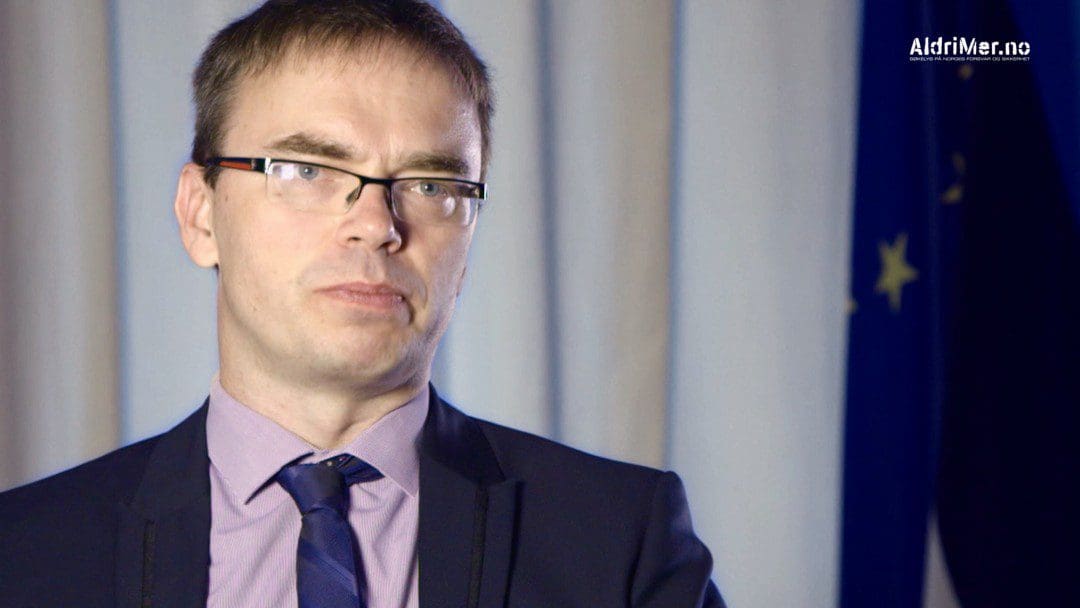
«I mean it is a NATO air base, so we are not allowed to aircraft drones over marine bases, or any other Estonian military base for that matter.»
Asked directly by aldrimer.no whether a drone would therefore be shot down to avoid the drone to successfully penetrate military areas, he replied:
«Well, if necessary, we take necessary measures to stop that from happening.»
Nor would Mikser comment on the information obtained by aldrimer.no that Estonian authorities believe Russia and Russian special forces are responsible for the drone traffic.
«Potentially, I mean, people or countries who are hostile to Estonia’s interests could use drones as platforms for surveillance. But I would comment on that when we have evidence that this has been the case,» says Mikser.
Took picture of drone
«One of the Estonian soldiers took a picture with a mobile (telephone) camera,» a NATO source says. «This picture was shown to NATO personnel. There is no doubt it was a tactical Spetsnaz drone.»
Defence sources told the aldrimer.no that Russian special forces use only tactical drones, most of them very small.
(Article continues under picture)

«These drones have a range of few kilometres – maximum 10 kilometres,» said a NATO source.
Until April 2015, NATO believes, Russia had used at least two different drone types in Estonia. Aldrimer.no has now learned that NATO is in possession of intelligence indicating that Russian Spetsnaz forces so far have operated four or five different types of tactical drones.
«That they are using several different tactical drones is therefore not abnormal,» says a source.
«Hope they get it next time»
Estonia’s former head of intelligence, Eerik-Niiles Kross, dismisses the notion of a possible Russian command centre or technical base structure inside Estonia for operating Russian drones inside the NATO country.
«They do not have a secret drone base in Estonia, no,» he says. But Kross refrained from commenting on the possibility of Russian special forces operating inside Estonia, with a command and/or technical back up structure located on the Russian side of the border.
(Article continues under picture)

Confronted by aldrimer.no with the information that the then minister of defense in Estonia in April 2015 ordered the special forces to open fire against drones and that the special forces hit one of the drones but were not able to shoot it down, Kross responded:
«Too bad – I hope next time we will.»
He was asked to describe the aggressiveness of using drones that far into Estonian territory.
«It’s worrisome,» Kross replies. «Again, it’s part of the bigger picture. It’s clearly not as risky as what they are doing with their fighters and their airplanes. Because they are really risking lives, in those almost close-to-collision incidents. Those violations of air space with a fighter are a lot more serious than a drone. But again, they are trying to do things to push the limits of what is allowed. And usually they do not stop before they are stopped.»
«Psychological warfare»
The former intelligence chief worries how far Russia will go in surveilling NATO personnel, and believes there are elements of psychological warfare at play.
«It is possible that Russians hire some provocateurs,» says Kross. «But I would consider that more as a psychological attack rather than serious intelligence collection. Because they don’t really need that for any information. It’s more of these old KGB tactics to annoy you.»
He asserts, however, that Russia has been tremendously focused on signals intelligence in Estonia, with particular focus on gathering data on NATO operations.
Kross declines to comment on specific episodes, but says: «The more NATO does here, the more interest we see from the Russians, yes, that is correct.»
Former defense minister Mikser expresses concern about the extent of Russian provocations, especially in the airspace over the Baltic Sea and in the form of marine traffic. He believes many other countries should share Estonia’s anxiety.
«When it comes to those provocation in the air, on the Baltic Sea, then I think that this is something not limited to the Baltic countries,» he says. «It actually goes beyond the Baltic region as well when it comes to flights of (the) Russian strategic bomber fleet that have been resumed over the past few years and also to manoeuvres on the sea.»
Footnote: Aldrimer.no has contacted NATO and the Estonian security police KAPO for comments. NATO and KAPO have not, so far, responded.
Edit 1 – 4 May 2016: After six days, NATO spokesperson Rehanna Jones-Boutaleb responded to our request for a comment. In an email she declines to comment. «We never comment on alleged leaks of confidential information», Jones-Boutaleb informs aldrimer.no in an email.
Edit 2 – 4 May 2016: In an email from the Estonian internal security service Kaitsepolitseiamet (KAPO), dated today, press officer Harrys Puusepp says «KAPO`s international cooperation is a state secret and therefore I cannot comment on whether and what information we share or do not share with our international partners». The press officer then goes on to add: «Without commenting our international cooperation I can say that we don`t have information that Russian Special Forces are operating in Estonia.» Puusepp volunteers no further comments on details of aldrimer.nos story about the NATO special operation forces exercise Trident JAGUAR in late april 2015.
Tell us: Do you have further information on this story or do you wish to provide input on other topics/stories you would like to see us report on? Contact us at post@aldrimer.no or through the encrypted contact form at kontaktskjemaet on our web pages. If you prefer being completely anonymous – please download TOR browser and enter our designated whistleblower platform www.securileaks.org while operating the TOR browser.

Kjetil Stormark
Kjetil Stormark er en journalist, forfatter og redaktør med mer enn 30 års journalistisk fartstid. Hans spesialområder er forsvars- og sikkerhetspolitikk, Forsvaret, politiet, terrorangrepene 22. juli 2011 spesielt og terrorisme generelt, etterretning, ekstremisme og historiske forhold fra den kalde krigen. Han har gjennomført mange dokumentarprosjekter, både som bøker og filmer. Stormark blir mye brukt som kommentator på stoffområder han dekker. Stormark er tidligere PR-rådgiver i byrået JKL Oslo. Stormark var presseråd for den norske FN-delegasjonen i New York da Norge var medlem av Sikkerhetsrådet i 2001-2002.

2 comments
Pingback: Russian special forces already operating inside Estonia | eastern europe in a nutshell
Pingback: Sweden is under attack from Russia. | eastern europe in a nutshell